 Back to home
Run before you walk
Why we should solve the hardest problem first
“for increasing his leisure and enriching his spiritual life”
Norbert Wiener - The Human Use of Human Beings
A machine can be better at walking than standing still. In 1998, Michael Coleman and Andy Ruina built a two-legged toy that walked downhill on gravity alone but was unstable in every standing position, showing that much of walking is a natural consequence of gravity and the mechanical geometry of the human body, without motors or active control.
In his recent Minus One podcast, Sergey Levine described that in machine learning it can help to solve the harder, more general problem first. He gives the example of NLP, and robotics is littered with such examples, be it learning perception and control together for manipulation in Levine’s 2016 visuomotor work, or sharing training across navigation and manipulation in Extreme Cross-Embodiment Learning, where experience of moving through scenes also improved manipulation. The field is singularly pointed towards generalization, and the company with the most data-efficient learning architecture, coupled with the largest-scale data corpus, will be the winner (plus the long tail of picks and shovels).
I think this is the most important problem in the world, and the effort being dedicated towards it still pales in comparison to the amount of investment and effort required to bring this about. This would mean a world where not only thinking itself is outsourced, but the physical labor itself.
Axioms of robotics development
“People need new tools to work with rather than tools that ‘work’ for them.”
Ivan Illich — Tools for Conviviality
Machines exist primarily to make humans better.
Matter will be the limiting factor: Food, housing, energy, care still come from physical work. In Sam Tidswell’s Ultrarobots, ReGen’s abundance thesis rests on robots that shape energy and matter into useful goods within Earth’s resource limits. When thinking of the robotics deployment path, it's important to consider that they must exist within the human world before reshaping it (see: humanoids section).
Robotics systems as feedback interruptions: What the robot expected has to meet what its action changed. Ashby’s An Introduction to Cybernetics treats deviations as information for correction, while beliefs in Thrun, Burgard and Fox’s Probabilistic Robotics change with each action and observation. ‘Robotics is a systems problem’
Morphology should follow from function: The work should determine the body: Shape, materials, sensors and control determine behavior together, as Pfeifer and Bongard argue in How the Body Shapes the Way We Think. This can help why some of the ambitious human imitation projects seem so far down the pipe (ie. Clone Robotics) vs practical application like tendon-based joints.
The fundamental flywheel of robotics
“A machine may be defined as a system of interruptions or breaks (coupures).”
Gilles Deleuze and Félix Guattari — Anti-Oedipus
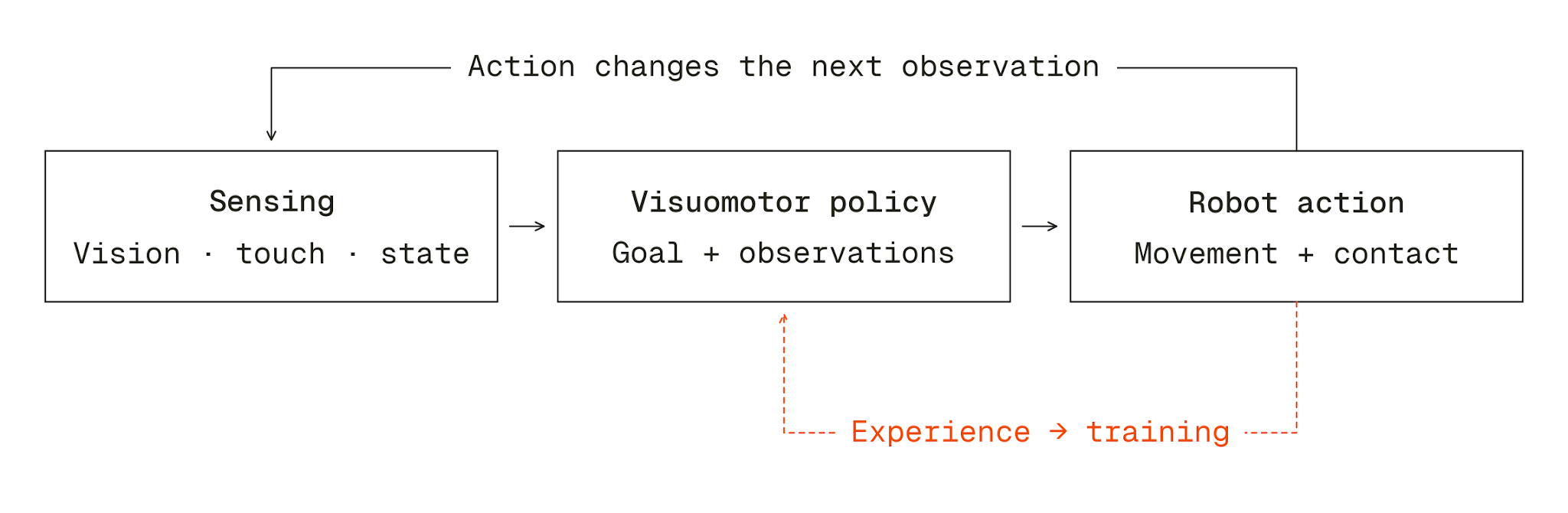
Sensing: The goal with sensing has been to create the highest fidelity view of the world of the robot. There is an inherent tradeoff between the amount of data ingested and its usefulness to guiding next actions. For localization, the 2014 LiDAR Odometry and Mapping (LOAM) method split LiDAR processing into frequent motion estimates and slower map updates, so the robot could track its own movement without reconstructing the whole world at the same rate. Historically, this process involved cameras, rangefinders, and sensors with the primary concern being actually maximizing state data within compute limits, but the modern issue is increasingly representation (as it is with all things). Research today is abstracting sensing inputs to the world or scene level, as in V-JEPA 2-AC, which plans through predictions of learned scene features instead of reconstructing each future image. The necessary unlock here is to preserve the state an action depends on, from the contact at a fingertip to a movement that happened a moment ago, without treating every extra pixel as equally useful.
Visuomotor policy: Robotics policies have seen the most change since the Cybernetics era of the 1940s. These are the ‘brain’ of the robot and have necessarily grown in complexity as robot morphologies and action has become more dynamic. When robot’s tasks were bounded and workflow-specific, their brains could be top-down, reactive algorithms; as with the aforementioned changes to sensing and on-body compute, in addition to seminal papers from thinkers like Sebastian Thrun on probabilistic robotics and Andrew Davison on monocular SLAM, and later Sergey Levine’s 2016 End-to-End Training of Deep Visuomotor Policies, policies shifted to deep-learning based approaches that brought 2 existing ideas to much richer inputs: imitation learning from demonstrations and reinforcement learning from the outcomes of actions.
Today, many visuomotor policies are vision-language-action (VLA) models: images, robot state, and instructions inform the next movement, while π0 from Physical Intelligence (PI) adds flow matching to a vision-language backbone so it can generate continuous action chunks. Earlier VLAs such as RT-2 and OpenVLA encoded actions as discrete tokens; diffusion and flow matching are ways to generate actions within a policy, rather than separate alternatives to VLAs. Dyna takes a different starting point with a video-model backbone that learns future video and actions, although its scaling-study policy can act without predicting future video during execution. Within the last ~year, models have also expanded how much of the past they retain: action chunks coordinate future movement, while systems such as PI’s Multi-Scale Embodied Memory combine recent video and written summaries to remember earlier steps.
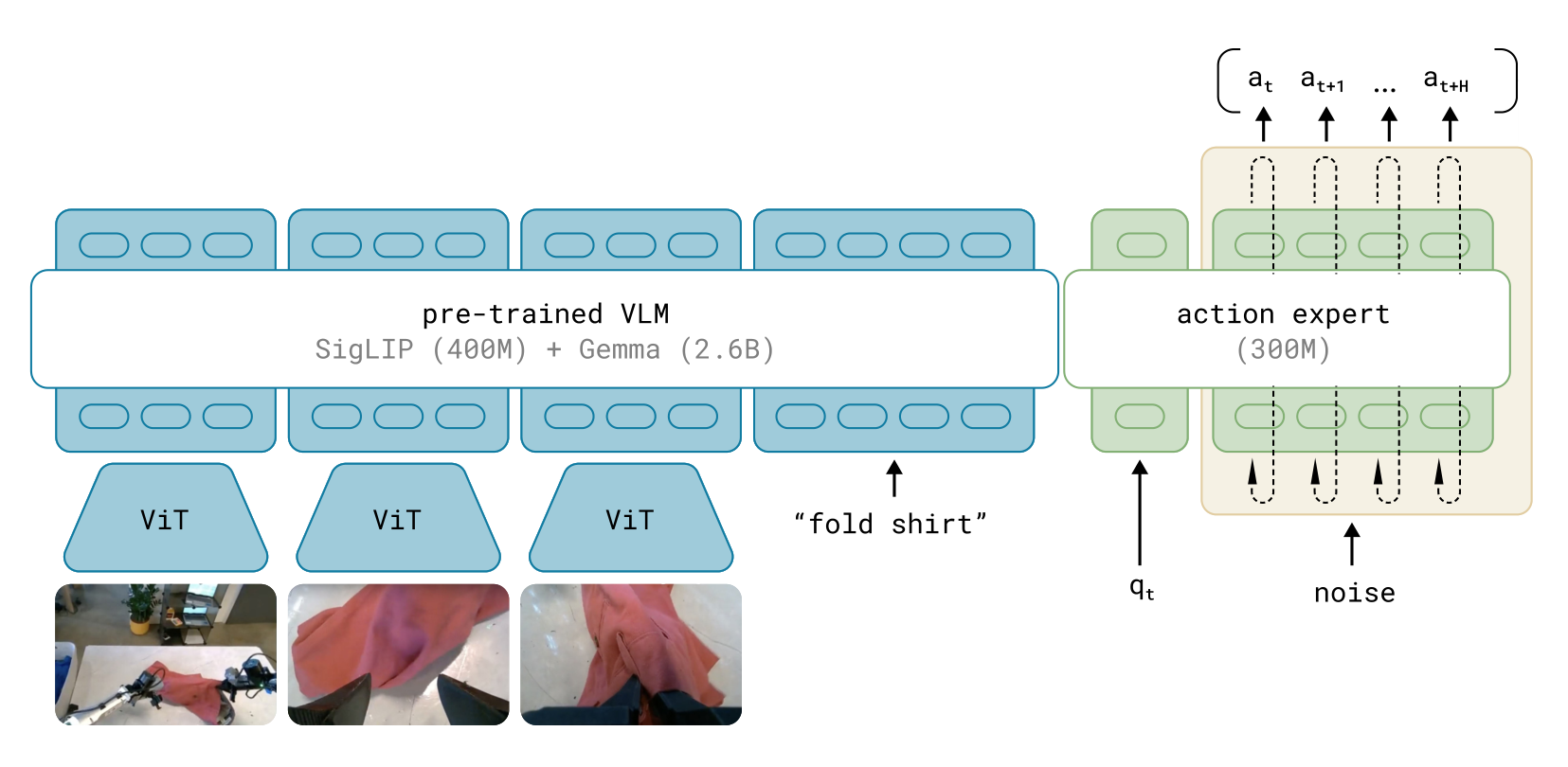
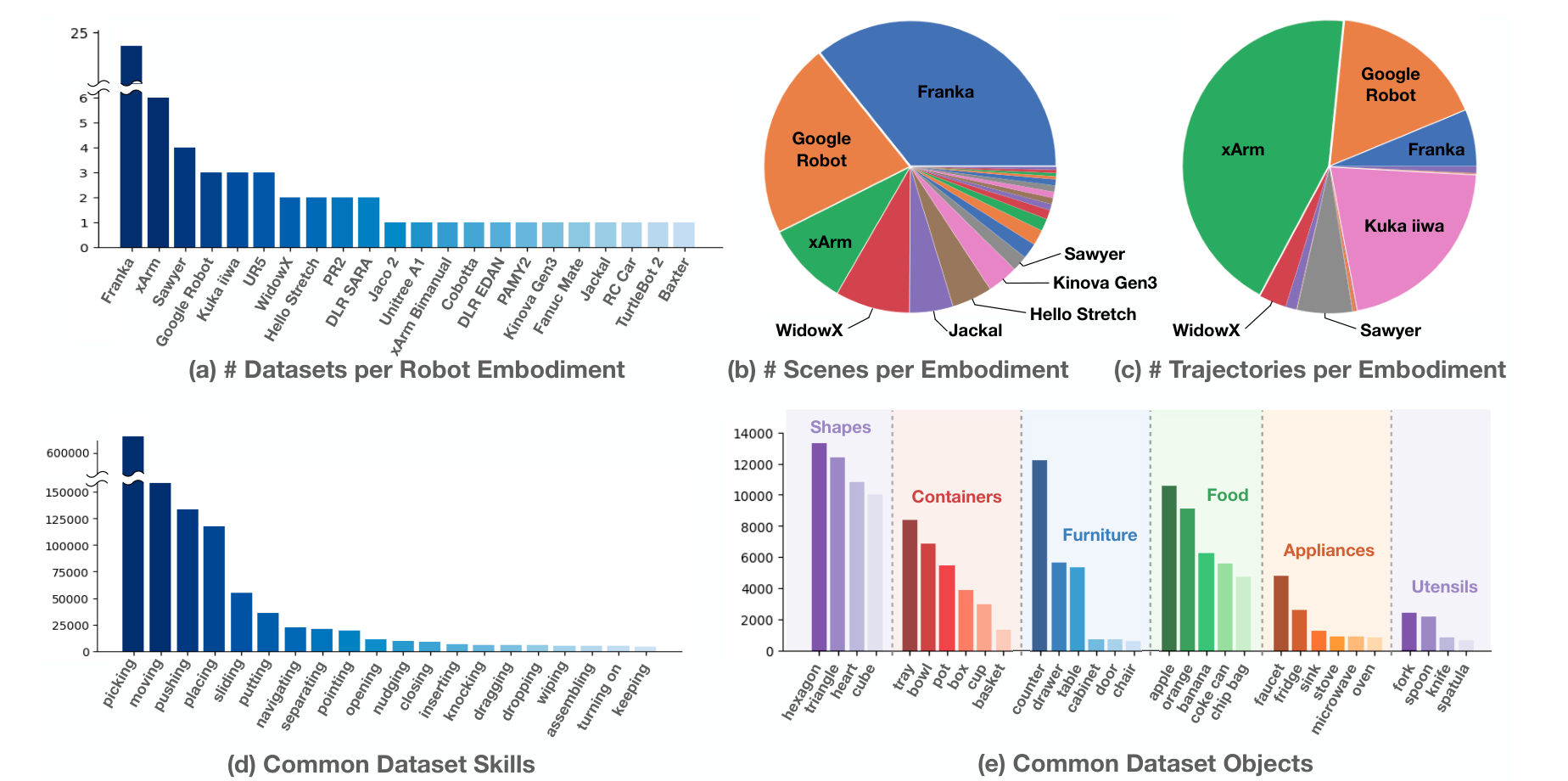
The next frontier here is data, and it’s basically the only thing that matters. My bet is that architectural improvements will let us use data more efficiently, but won’t remove the need to collect far more of it. We don’t know how many more hours will produce general capabilities; Open X-Embodiment pooled over a million robot trajectories across 22 embodiments, while Dyna-2 pretrained on over a million hours of human video, and these aren’t interchangeable units of experience. Even in the early innings of LLMs, models could draw on internet-scale text for semantic understanding and were still pretty lackluster. Honing in on the parallel to LLMs, I’d say we are around 2018-2019 where early transformers architectures showed the ability to effectively be next-token generators but lacked the ability to generalize effectively.
Action: Much of the action stack hasn’t changed, even as we’ve replaced the code above it with a neural network. With demonstration-trained policies such as Action Chunking with Transformers (ACT), we can send joint-position targets to the controller directly; a policy that instead specifies where the gripper should be can use inverse kinematics to find the joint configuration, and below either approach the controller compares the target with measured movement while the motor drive regulates current to produce torque. The resulting torque still passes through the body’s gearing, friction, and compliance, so the same target can produce a different movement under load and the controller has to correct from what the joint actually did.
This is the loop back to sensing: retain what the body did alongside what we asked it to do and whether it worked, then use that experience to improve the policy. New observations can change the next command immediately, while the recorded experience can enter a later post-training update or, if pooled more broadly, the next round of pretraining.
Data scaling is finally working
“Variety can destroy variety.”
W. Ross Ashby — An Introduction to Cybernetics
Around 2022, it became clear that LLM performance depends on the data used in pretraining, alongside model size and compute. In Jordan Hoffmann and colleagues’ 2022 Chinchilla study, a 70-billion-parameter model trained on 1.4 trillion tokens outperformed Gopher’s 280-billion-parameter model at comparable training compute. It seems obvious now, but adding parameters wasn’t enough: the larger model also needed enough data to learn from, which is why I’d think about model size, data, and compute as a joint investment.
Such a discovery was harder to establish in robotics, as large pretrained models are a relatively new approach to visuomotor policies and robot demonstrations have to be physically collected as opposed to being able to mass-scrape internet data for LLM training. This matters because this is a step closer to generalization, as neural networks can now predict action chunks of joint targets from observations and instructions, rather than us specifying each movement.
The clearest example of this is Dyna’s 2026 study of Dyna-2 where the team found that increasing human-video pretraining from 1,000 to one million hours raised mean normalized performance across fourteen tasks from 20% to 53%. It’s hard to overstate how important proving this out is, as it gives us evidence that more pretraining data can buy better robot performance with the same amount of robot post-training data.
This leads to a few important questions
This is the same problem as LLMs, but harder: The basic process of LLM pre-training still applies to robotics VLAs, as these models produce an array of output trajectories based on state and text inputs and use backpropagation and gradient descent to update the model’s weights. In PI’s π*0.6, the RECAP method first pretrains on existing experience through offline reinforcement learning, then moves into task-specific post-training with demonstrations followed by rounds of autonomous attempts and optional human corrections; a learned value estimate helps the policy favor actions with better predicted outcomes. The training signal is therefore more than whether the movement resembles a demonstration, which matters if we want a robot to recover from a mistake nobody deliberately taught it to make.
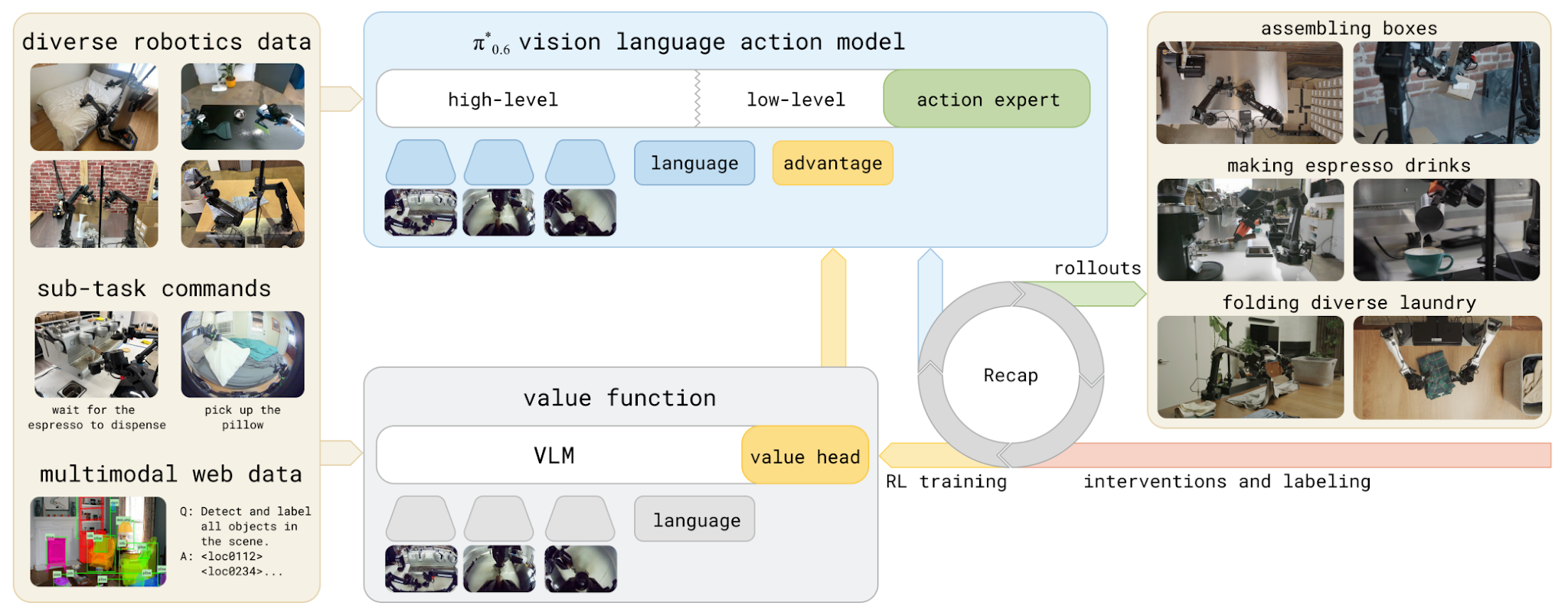
For pretraining, the naive bet would be that fitting more demonstrated action sequences is enough, without asking what the model retains about the objects and their relationships. The pretrained vision-language knowledge in OpenVLA helps with those objects and relationships, but the policy still has to learn how they respond when the robot interacts with them.
Even with something as simple as a cup, the same shape can mean a different interaction once it’s full: the weight has changed, and tilting it now risks spilling what’s inside. This is the gap between recognizing an object and understanding the interaction, which RT-2 made especially clear: web knowledge helped it select a rock as an improvised hammer, but that didn’t teach it the physical skill of hammering.
This is what makes the data problem so immense, as these models need to understand the force to apply for given actions, how surfaces react against each other, how different embodiments affect actions, etc. compare this to an LLM where input data is accessible on the internet and semantic understanding IS the thing. Robots have to connect those observations to continuous movement and contact, while an LLM’s text interface leaves much of that physical execution to whoever uses its answer.
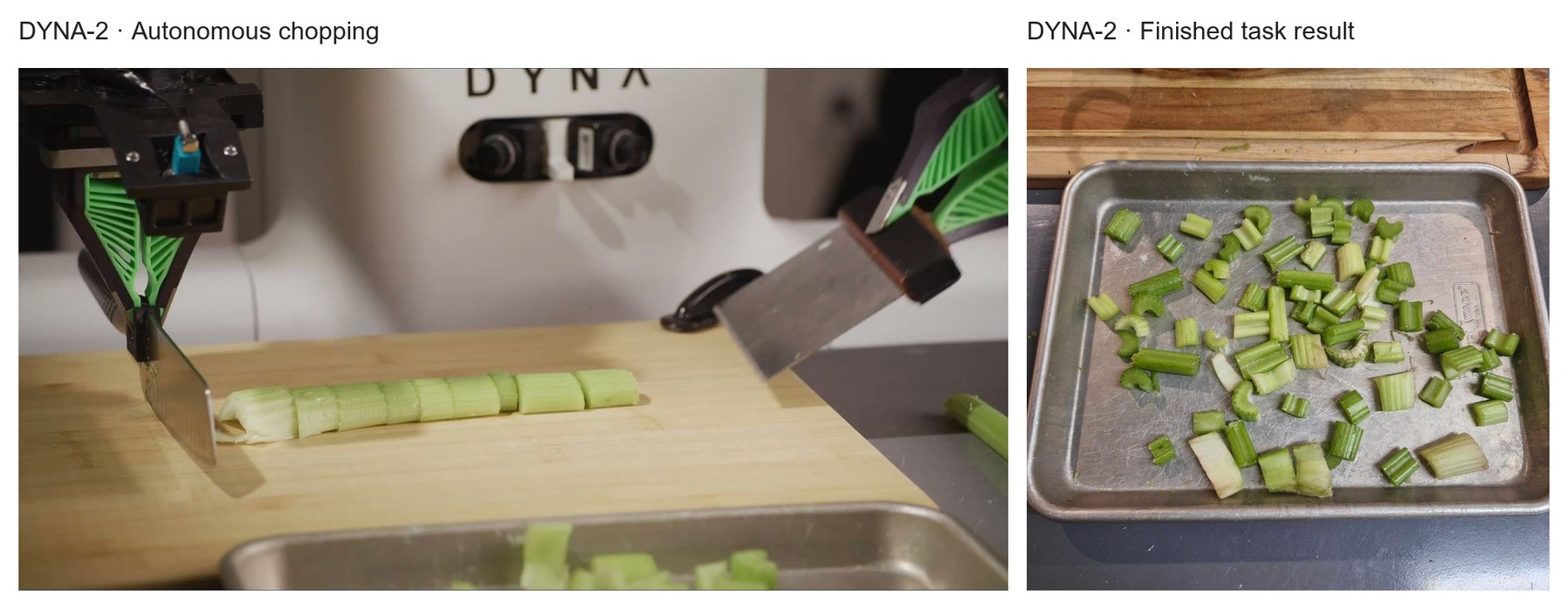
There are some solutions such as UMI (shoutout Pantheon) and making learning more efficient, much of which will be made easier through deployment data, but for true generalization as we see with LLMs, we will still likely need one of the largest data collection projects in human history.
We’re incredibly far: Even a recording of someone opening a stuck drawer can miss the resistance that told them to change their pulling angle, which gets at Michael Polanyi’s argument in The Tacit Dimension (1966) that “we can know more than we can tell.” We know how to make these small adjustments without describing them to ourselves (or even noticing them), and that’s a lot of physical knowledge to recover from recordings that mostly show where our hands went.
It’s also important to note how hilariously small this data scale still is. The data burden will be insane because the range of relevant variations is effectively unbounded: we need touch, force, and sensing data across different bodies, objects, surfaces, and failures, and collection doesn’t have the economies of scale of internet data. A sensor trace is cheap to copy once it exists, but collecting the next useful one still means carrying out and measuring an interaction, which is why the cost is in producing the experience as much as storing it.
There have been some landmark efforts to collate large-scale data corpuses for robotics pre-training such as OpenX which was used to train OpenVLA and PI 0.5. Within the last ~year the leading labs are doubling down on proprietary data collections but if we keep up the parallel to LLMs, these data collections should be second to a centralized data effort (and it seems like the word agrees, as with the swath of new robotics data companies in recent months).
Given the scale of the problem, it’s important to consider what this implies for truly general robotics foundation models. We likely aren’t gonna see the ChatGPT moment for robotics in the near future (no matter how much tweets would like you to believe this) with this approach. Other approaches like physics-based models might inflect, but the data collection effort to train a general purpose VLA needs infrastructure.
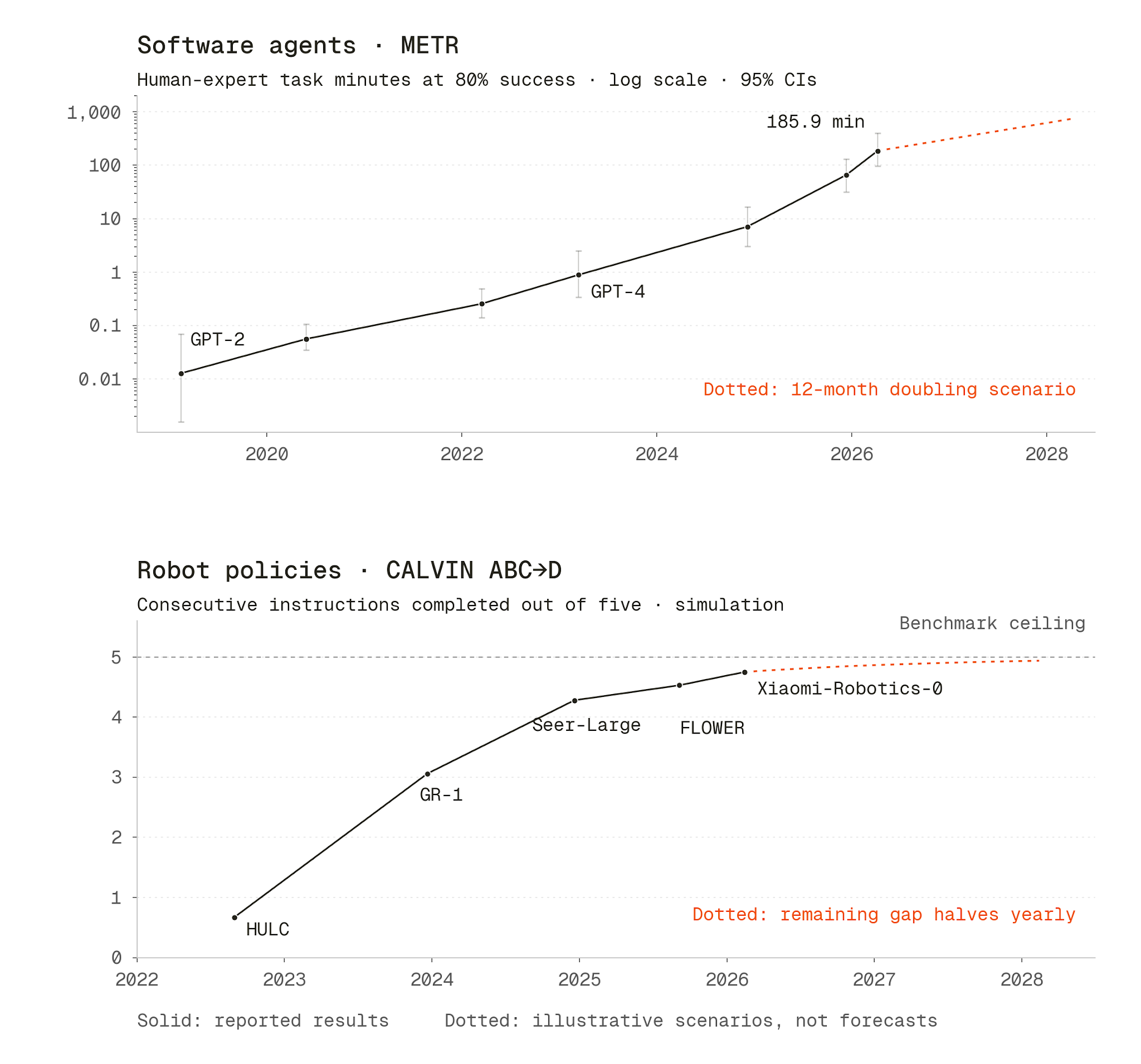
This makes robots investable: If robotics model pretraining sees power law reductions in prediction error as seen with LLMs, this makes them potentially one of the most compelling business models to invest behind. Inference can be an astoundingly great business, as after the initial cost of model training you have a capability that can be sold repeatedly across customers without retraining it for each one. Falling token prices put pressure on margins if costs don’t fall as quickly, although greater demand at lower prices can also expand the market. For robots, I’d expect more of the pricing power to sit in reliable physical execution, where integration and upkeep matter alongside the model. The ‘end-state’ of a robotics business could mimic the unit economics of inference if generalization reduces the cost of teaching each deployment and the machine can earn back its manufacturing, maintenance, and supervision costs.
Power law dynamics would give us a basis for estimating the training required for the next reduction in model error. At some point, better recovery could remove the need for a person to stand beside the robot, so the commercial return could be much larger than the change in its benchmark score.
Failure as an asset
“Truth will sooner come out from error than from confusion.”
Francis Bacon — The New Organon
This is why failure data may be one of the most important inputs at this stage, as the robot’s mistakes expose states that clean human demonstrations don’t cover. In his Dwarkesh interview, Sergey Levine describes robots that can “make mistakes and recover from those mistakes” and discusses PI’s goal to “extract good training signals from bad experiential data”.
I think this can go two ways: expand task coverage in the training data or improve how the neural network learns from it.
The goal here will be to make training more efficient and centralized. I see this happening a couple ways:
Learning from human video: Human footage is easier to collect than robot demonstrations, but often lacks usable action labels, so an action-only objective can’t learn from all of it. In DYNA, the next frames supply another target: predict how the scene changes, with those learned features shared by the action policy. Holding action-labelled data fixed while adding video-only training improved prediction on unseen robot data, so this is a specific reason why more human footage can help a robot with different joints and controls.
Specific architectural unlocks: I’d look at two directions here focused on representation theory, one is stronger instruction conditioning through FiLM, where the command scales and shifts visual features so the robot processes the scene according to what we ask; in the 2025 OpenVLA-OFT study by Moo Jin Kim, Chelsea Finn, and Percy Liang, removing FiLM dropped correct target selection to 33% on both food-selection tasks (chance among three options). The broader parallel to RoPE is explicit structure in the computation: relative position in LLM attention, task context in the robot’s visual processing.
Alongside architecture, I’d look at action representations such as FAST, which uses a discrete cosine transform and byte-pair encoding to compress movement sequences, much as language tokenizers compress text. That reduces the shortcut of predicting nearly identical successive action tokens, so my bet is that better conditioning and representations will let the next batch of data teach more than simply scaling the same model.
Better coverage per collection hour: For a robot to work in a new room with a new object, repeating a demonstration in the old room eventually buys less than changing the setup. Across more than 40,000 demonstrations and 15,000 real robot trials, Fanqi Lin and colleagues’ Data Scaling Laws in Imitation Learning for Robotic Manipulation found roughly power-law gains with object and environment diversity, while further demonstrations within one setup had diminishing returns. The collection strategy becomes part of the learning method.
I liken this to the LLMs (again), as if we look at what has led to the step-change increases in model performance, it’s been more data paired with changes in how the model uses it. In robotics, that means architectural changes such as FiLM, alongside training objectives such as DYNA’s future-video prediction, so scaling the data and improving the model go together.
In LLMs, early progress was driven by more pretraining data alongside model size and compute, while architectural changes such as fine-grained expert routing, shared experts, and multi-head latent attention improved efficiency. With the first two, DeepSeekMoE 16B reached comparable overall performance to DeepSeek 7B on the same two-trillion-token corpus at about 40% of the compute, with small routed experts for specialized work and shared experts for common patterns. The later DeepSeek-V2 work added latent attention, which compresses the key/value cache to reduce inference memory. In robotics, we’re still a ways away from the initial productivity gain of data scaling, and thus it’s important to not overstate the importance of architectural changes to these models especially as there has yet to be enough investment in one model to warrant tuning of a specific architecture.
When LLM scaling laws became clearer in Kaplan and colleagues’ 2020 paper, Scaling Laws for Neural Language Models, this was, to me, a signal that these could be viable businesses: spending on compute and data could buy more predictable gains in capability, which made the business case easier to underwrite. Looking back at the gold rush in training data (Scale) then RL environments (Mercor), it’s easy to see the parallel for robotics 5 years down the pipe.
The important questions here are manyfold:
Is the best path to OOD performance wider data coverage or does this NEED an architecture change?
What data mix is necessary (teleop, egocentric, etc.)?
How do the data consumption needs of the software layer change across different visuomotor policy regimes (VLAs, world-action models, etc.)?
What is the acquisition and consumption path of different data types?
What humans got right
“We know nothing about a body until we know what it can do”
Gilles Deleuze and Félix Guattari — A Thousand Plateaus
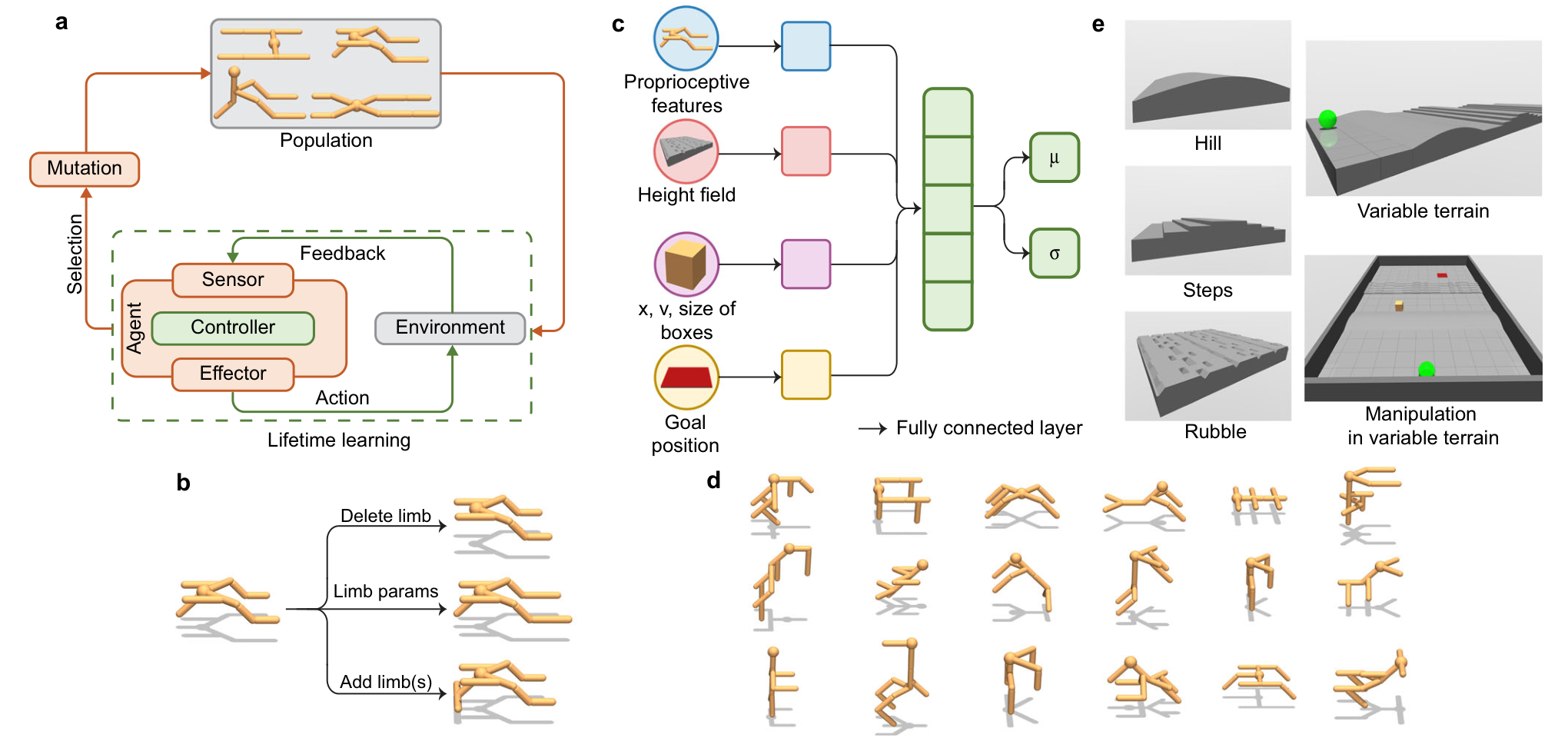
Human imitation in design has been a consistent goal of robotics design. It’s been a catalyst of interesting progress beyond the practical step-changes in hardware development (actuators, particularly brushless DC motors, their drives, batteries, and compute).
For hands, much of this has focused on tendon-driven actuation, as motors can sit in the forearm and transmit force to the fingers without adding all of their weight to the moving joints. This is the approach in Mimic’s M1, where a wider wrist accommodates tendon routing over bearings and pulleys to reduce sliding friction through the transmission. More literal attempts to reproduce muscle, such as HASEL’s electrically driven, fluid-filled pouches, have also produced interesting research, although the 2024 hopping-leg demonstration still relied on a support boom and external high-voltage power.
In the near term, there’s still a lot of room to improve the electric actuators we already have. Much of the progress in force control has come from matching high-torque motors to lower gear reductions, as in MIT’s Cheetah research, where the legs could respond quickly to contact without the large reflected inertia of a heavily geared transmission. This shifts the requirements into the motor’s torque and thermal performance, while better models may also let us revisit more complicated mechanisms that were previously too difficult to control.
Thinking about deployment, I want to borrow a description from Deena Shakir and Ghazwa Khalatbari’s argument for morphology-agnostic robotics. The world is designed for humans and this gives humanoids a practical advantage, as they can reach shelves, work at counters, and use existing tools without redesigning the environment. I think the deployment of general-purpose models will look like a diffusion curve, where humanoids initially benefit from that compatibility while the longer tail of specialized machines expands as the intelligence transfers across embodiments. Further out, the building blocks of the economy can be redesigned around embodied intelligence, from adding autonomy to an existing excavator to designing machinery that was never meant for a human operator.
I’d expect much of near-term deployment to remain task-specific, where low-dexterity tasks can still have high economic value because the robot repeats the same paid operation for hours. DHL reports that Boston Dynamics’ Stretch can unload up to 700 cases per hour with a suction gripper, as the manipulation problem is constrained around boxes rather than the much wider range of objects and contacts a human hand handles. The commercial value here depends on unloading performance, supervision, and downtime, so investing in more finger dexterity would have to improve those numbers to be worth the added complexity.
Generalization
“For it is far better to know something about everything than to know all about one thing.”
Blaise Pascal — Pensées
This is the holy grail of robotics, the field is singularly pointed at achieving generalized robot intelligence and so far, this looks like diffusion / flow matching for action generation and physics or semantics based state estimation. Even with these , learned robotics policies were often trained or fine-tuned for individual tasks, while the goal with general-purpose models is to perform unfamiliar tasks from an instruction or a small number of demonstrations. The clearest recent example is Generalist’s GEN-1.5, where the company reports 59% average success across ten short tasks from a single 3–12-second sensorimotor demonstration (without changing the model weights), rising to 83% with five minutes of demonstration data per task and ten gradient steps.
We’re still talking about one-shotting short-horizon tasks here, while household autonomy also requires memory of what the robot has already done and recovery from mistakes over a longer sequence, even if each individual movement is familiar.
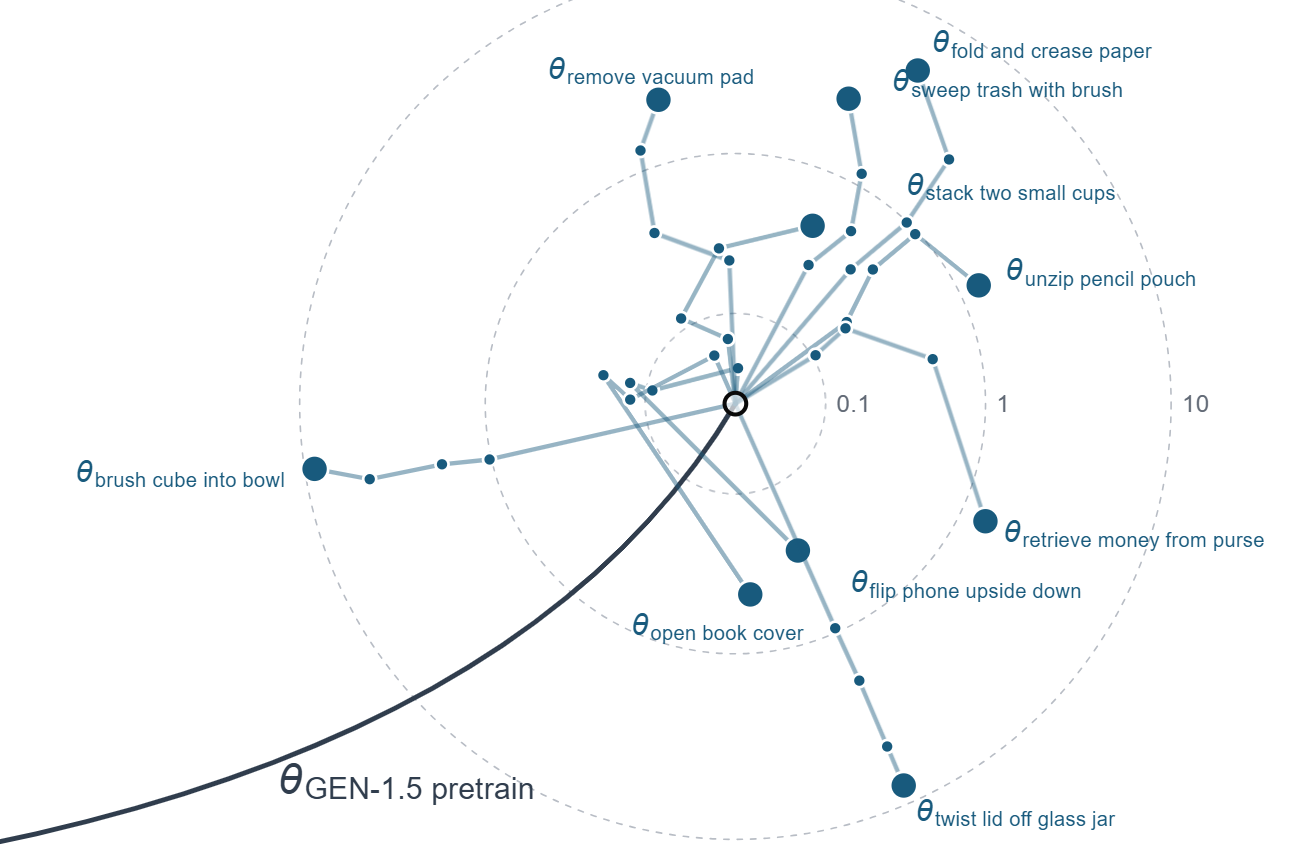
The data requirements also change across embodiments, as joint limits, reach, and control interfaces vary between robots even when the task is the same. In PI’s π0.7, laundry-folding data from smaller bimanual robots transferred to UR5e arms that had only appeared in training on other tasks, so the model didn’t require laundry demonstrations on that particular platform. This matters because the cost of data collection can change substantially if we don’t need to recollect every task for every robot, which would make shared pretraining much more valuable as the range of embodiments grows.
For a shared pretrained model, the available data sources contain different parts of the state-action relationship: human video supplies broad experience of objects and interactions, UMI preserves more precise movement trajectories through a handheld gripper, and teleoperation supplies actions on the same embodiment that will execute the policy. I think the collection strategy will have to combine these, alongside simulation and deployment data, as none of them captures all the forces, contact states, and failure cases we need. It’s also important to distinguish deployment volume from data diversity: a robot can repeat the same paid task thousands of times without encountering the range of conditions in a deliberately varied collection campaign, so more deployments don’t automatically solve generalization.
Scaling
“Civilization advances by extending the number of important operations which we can perform without thinking about them.”
Alfred North Whitehead — An Introduction to Mathematics
Robotics companies today are not scale-pilled enough, even though everyone agrees this is necessary for the field. Many of the key unlocks for robotics progress such as the deployment data flywheel and cross-embodiment generalization are expensive to establish, with both requiring scaled data collection and deployment. The reason there are so few scaled robotics deployment companies today is that the returns side of the investment case is still incredibly murky. Taking a few cases:
The in-house companies (Rivian / Mind, Tesla, etc): Analyzing a robotics company from the perspective of the data flywheel, it’s easy to see why these in-house companies are so compelling- you get vast proprietary data, simpler paths to deployments, and (almost) free funding. (Mind is now independently financed, with Rivian as a shareholder and factory partner.) Take Teradyne for example which has spent over $400M upfront on robots in investment while its robotics business is still at $383M of run rate. Here’s a couple benchmarks for you to get an understanding of what the unit economics of a robotics company looks like today (across the industry):
Agility: Amazon’s five-robot purchase works out to $210,000 each, although this was an investor-linked agreement; the price is disclosed, the profit on that deployment isn’t.
Formic: At ICON, $10 per operating hour covered the robot and support, with reported operating savings of 40% for that process, so the customer could pay for the work without buying the machine.
Skild: By September 2026 the company reported $100M ARR, although it hasn’t disclosed the margins or the split between software, hardware, and services.
Symbotic: Software maintenance and support carried roughly 73% gross margin in fiscal Q3 2026, but the overall business was at 22%, as most revenue still came from physical systems.
Intuitive: In Q3 2026, 84% of revenue was recurring through instruments, accessories, service, and leases, an established example of the robot creating a continuing business around its use.
The independents (Sunday, Dyna, Figure, Gecko): These companies don’t inherit a parent company’s operating business, so have to build or negotiate access to data, funding, and deployments (as Figure does through its Brookfield partnership). These utilize a mix of proprietary software and hardware, with Gecko focused on industrial inspection and Sunday on a vertically integrated system for the home. Given concentration in software investment and the progress in training SOTA VLAs/WAMs to fit new embodiments, I think these companies face a huge burden to differentiate through hardware design and how reliably the whole system works in deployment.
The Chinese mega-labs (AgiBot, Galbot, and Unitree): These companies are building more of the data and hardware infrastructure themselves, as with AgiBot’s million-trajectory collection effort and Unitree’s internally developed motors and controllers, while Galbot’s work on CATL’s production lines provides access to the environments where the models need to become useful.
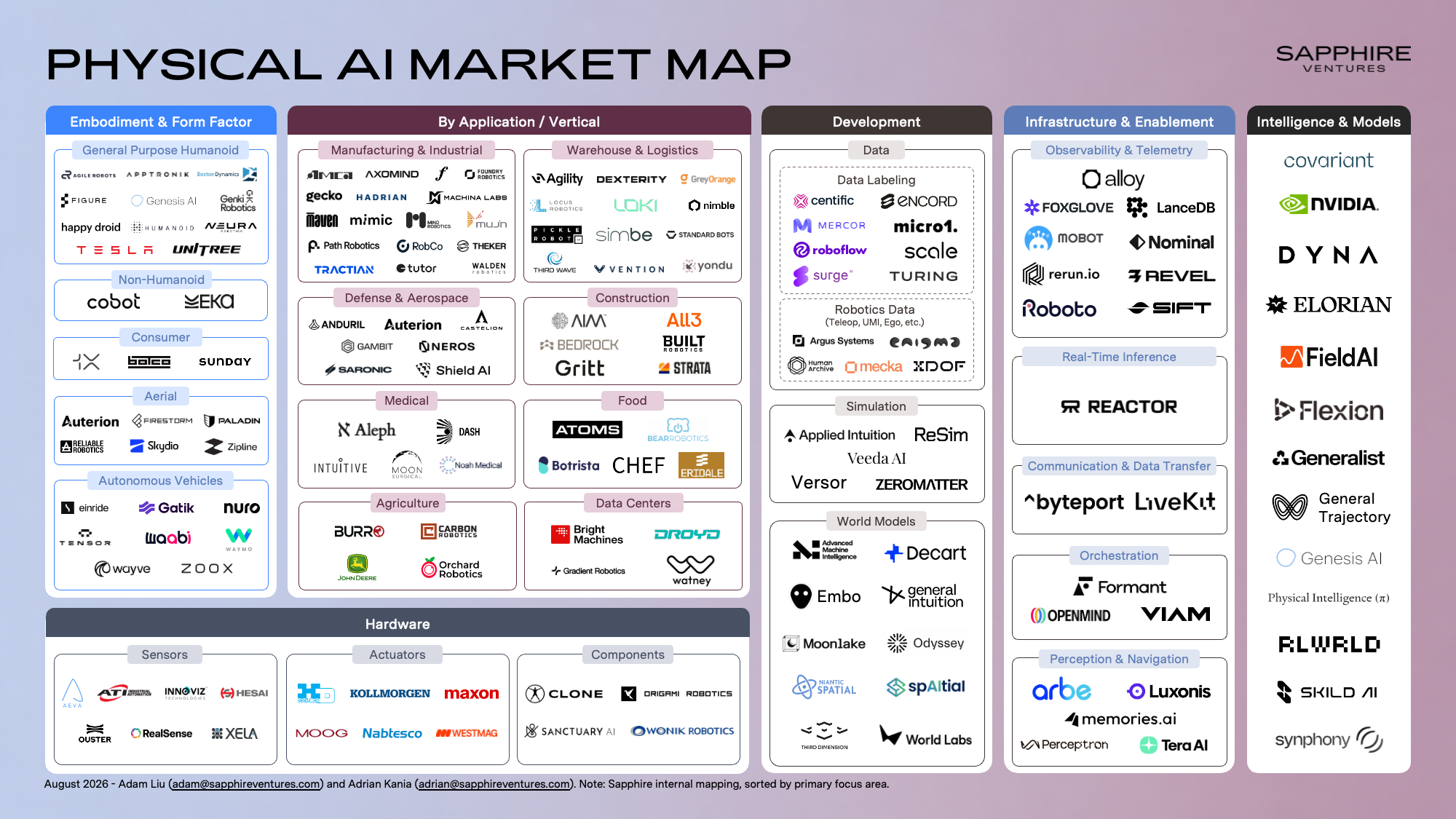
This shows a difficulty with the economics of robotics, in that the startup costs of model training, data collection, and hardware manufacturing only make sense with immense deployment scale, far beyond even the dynamic for LLMs. For example with Agility, the company models a Digit 5 subscription at $8,500 a month, or ~$500k over 5 years, while cheaper manufacturing is expected to leave more of that revenue with the company (projected product margins exclude corporate R&D and overhead). We’re very early in that transition: revenue was $361,000 against $5.8M of cost of goods sold in the first nine months of 2026, so the bet requires robots that stay useful for years without maintenance and support costs eating through those recurring payments.
The bull case is that the marginal benefit of robotics investment is orders of magnitude higher than LLMs and much of the hard work is already done. Taking RT-2 or π0 as examples, they rely on LLM backbones which have already benefited from the architecture investments in transformers and internet-scale vision-language pretraining. RT-2 builds on PaLI-X and PaLM-E, while π0 uses PaliGemma, so we don’t have to teach these robots language and visual recognition from scratch, even though contact and movement still require robot experience.
To make robotics companies scale like software, this means that the unit economics of a robotics deployment company requires somewhat generalizable intelligence and hardware costs to drop significantly, in addition to extreme short term centralization. I’m unsure if this means a single mega company across the entire development lifecycle or individual winners in each function - with all the funding in robotics data-specific labs I’m inclined to say the latter.
Hardware gaps
“The hand-mill gives you society with the feudal lord; the steam-mill, society with the industrial capitalist.”
Karl Marx — The Poverty of Philosophy
When thinking about how better model performance translates to deployment, it’s important to consider that scaling a fleet still requires motors, transmissions, sensors, and batteries (for untethered systems), even if the model is shared. Alongside the intelligence side of the equation, we can still get sizeable performance gains from the hardware available today, as the same motor that produces enough torque for a brief lift may overheat through repeated lifts and holds over a warehouse shift. My bet is that matching motors, gearing, and cooling to the actual duty can buy useful deployment hours before we need a new class of actuator, although every extra robot still requires another set of those parts.
The supply risk is already visible in other industries that use these components: in May 2025, Ford brought forward a week of downtime at its Chicago Explorer plant amid rare-earth supply constraints. For compact permanent-magnet motors, neodymium and praseodymium are particularly important, but the constraint is as much about processing as mining, with China accounting for 91% of refined magnet rare earths and 94% of sintered permanent magnets in 2024 according to the IEA.
There is investment in domestic capacity, including MP Materials’ refining and magnet production, but this still has to become a reliable supply of qualified components and this is FAR too small compared to the scale of the problem.
The same applies further down the actuator stack, where reducers, bearings, and screws have to meet tolerances and survive repeated loading; a cheap arm that works for data collection may not be reliable enough for deployment.
LLMs got lucky with GPUs, but robots have to carry their inference hardware or maintain a connection to it, so on- versus off-body intelligence is also a question of power, cooling, and latency. I think both approaches will matter: larger models can run remotely for decisions that tolerate latency, while rapid feedback remains local and systems such as Gemini Robotics On-Device put more of the learned policy onboard. The balance depends on the application, as connectivity may be reliable in a managed facility while a robot in remote inspection has to continue operating without it.
Economic vs human value
“We shall once more value ends above means and prefer the good to the useful.”
John Maynard Keynes — Economic Possibilities for Our Grandchildren
The economic value is enterprise but the human value is consumer. I come back to this distinction because a company can justify a robot through the cost of a shift, the number of boxes moved, or the hours a production line can operate, while much of the work we do for ourselves and for one another has no such transaction attached to it (someone still has to cook, clean, carry things, and help a parent through the day, whether or not anyone is paid). In the home, the value of those same movements can extend into where a person is able to live and how much of their day they can decide for themselves, which is why I think consumer robotics will have a human significance that the initial market size may not capture.
I could see narrow consumer pilots spreading sooner than some enterprise applications, as a household might accept a useful machine that still requires occasional guidance while a factory has to qualify it against an entire production process. The owner can help with an unfamiliar object and decide that the remaining assistance is worth it, while a missed transfer in a production line may interrupt everything behind it; both settings still present the generalization problems we’ve discussed, but the amount and cost of human help can change which applications are worth deploying first.
At scale, though, my bet is still overwhelmingly enterprise, where a reliable system can repeat the same paid operation for many hours and the investment can be justified against its output, supervision, and maintenance. As more of that labor becomes autonomous, materials, energy, facilities, and the supply chains behind them become a larger part of the economics, which is why I think the investment opportunity extends so far beyond whoever trains the best policy. The human value also extends well beyond the robots people buy for themselves: a cheaper way to build housing could matter far more to a family than a robot they can afford to put inside it, and the same is true of the machines that produce their food or maintain their electricity. We’ll experience much of this abundance through things that become affordable or available, without ever seeing the machines that produced them.
Given the scale of that possibility, I keep coming back to a contradiction Marx describes in the Grundrisse: an economy can need less human labor to produce its material wealth while people still need to sell their labor to take part in it. If we can produce the same things with fewer hours of human labor, we can choose to produce more, work less, or some combination of the two, but the person whose labor has been displaced doesn’t necessarily get to make that choice, especially if their access to the output still depends on the wage the machine has helped remove. Lower production costs and a broader ability to afford the resulting goods are related through ownership, prices, and income, and it’s possible for a technology to succeed at the first without immediately delivering the second. This matters to the investment thesis too, as the value of cheap production depends on who can actually use and pay for what is produced.
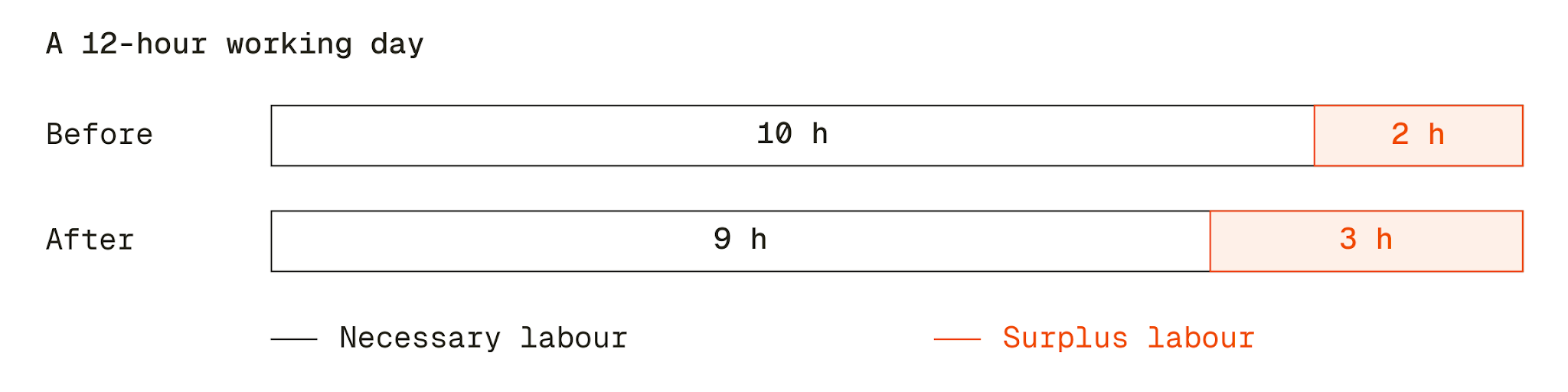
For the people who do get that time back, I don’t think every saved hour has to become another productive hour, which is easy to lose sight of when the investment case is built around output per hour and the number of people needed to sustain it.
There’s a further challenge in Illich’s Tools for Conviviality, where he argues that more industrial output doesn’t necessarily give people more control over their lives: “People can be equally enslaved by their tools.” His objection to industrial dependence complicates the abundance thesis, because having a machine perform a task and having the freedom to decide how that task is performed aren’t always the same thing. We might want a robot to prepare dinner because we’re exhausted, or to handle the parts of cooking that our hands can no longer manage, while still wanting to choose the food, change the recipe, or cook for someone ourselves; I think the point of human agency here is that we can choose which work to give away and which work to keep, even when a machine could do it faster. That also means the ability to refuse the machine, change the arrangement, and pursue a purpose that wasn’t anticipated by whoever designed it, rather than only select between the options they made available.
Once these machines can produce more than we can, there’s a question of whether we use that capacity to reduce the demands on people or simply raise the expectations around them. For example a faster packing station could shorten a shift, but it could also increase the hourly target for the person beside it. I think Deleuze’s Postscript on the Societies of Control is poignant here because his account of control through continuously changing conditions, beyond the boundaries of a factory or school, helps explain why we could do less physical work without being any less subject to measurement or demands on our time.
If the aim is the abundance described in ReGen’s Ultrarobots thesis, where robots shape energy and matter into the things humans need within the Earth’s resource limits, then we have an enormous amount to build, repair, grow, and provide, from affordable housing to help with daily life that doesn’t depend on a family member leaving paid work. I think the effort dedicated to robotics still pales in comparison to what this could mean, especially for people whose physical needs aren’t well served today. I’d judge the result by whether more people can decide how and where to live, how much of their time to give to paid work, and how much to give to one another, with the machines taking over enough of the necessary labor that those decisions become practical choices rather than things we would do if we had the time or money.